
A rainwater tank is usually one of two jobs: something you want for the garden, laundry and toilets, or something a council permit has made a condition of the build. Measured Plumbing handles rainwater tank installation across Melbourne, along with stormwater pits, detention systems and pumps, for homes, extensions and new builds. Where the plans already specify a tank size and a discharge rate, we build to them.
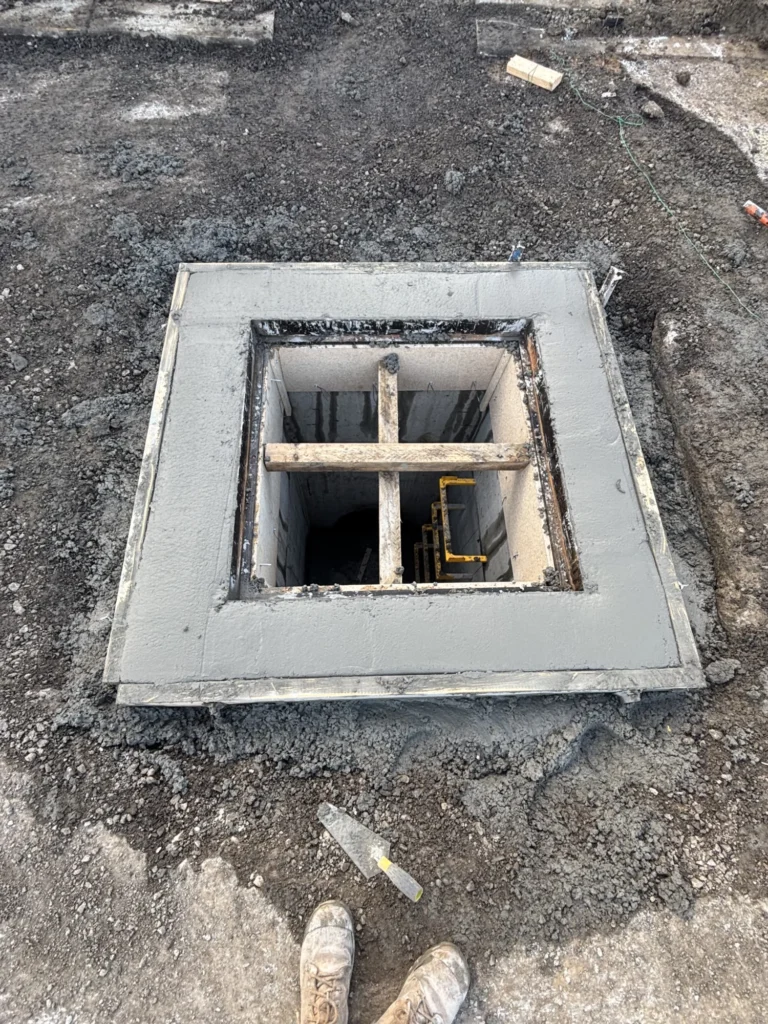
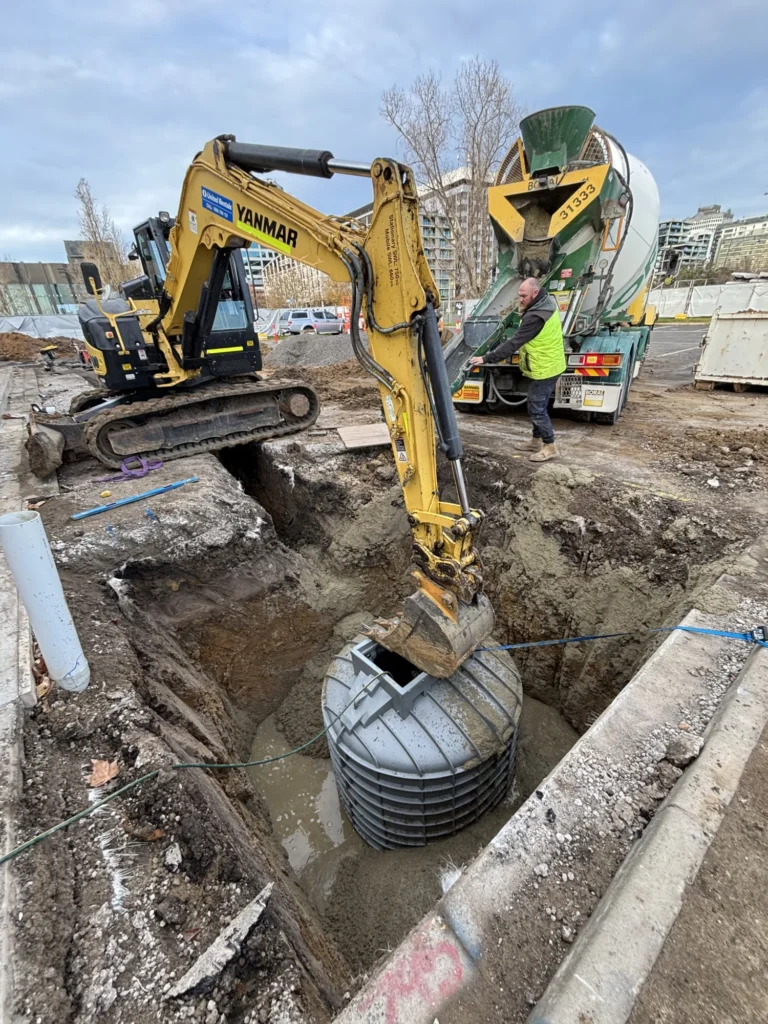
Rainwater tank installation: we set above-ground and in-ground tanks on a prepared base and connect them to the downpipes.
Tank plumbing to fixtures: toilets, laundry cold taps and garden taps run off the tank, with a mains switching device for top-up supply.
Stormwater detention systems: we install detention tanks and pits to the storage volume and outlet control shown on your engineer's design.
Stormwater pits and pipework: grated, silt and junction pits set to level, with pipework laid to the fall on the plan.
Charged stormwater lines: sealed below-ground downpipe lines for sites where the outlet sits higher than the point water is collected.
Stormwater, sump and tank pumps: we install and replace pumps, wells and pit-and-pump arrangements for driveways, basements and low-lying yards.
Drainage for extensions and new builds: new roof, paving and deck areas tied into the existing stormwater drainage or a new legal point of discharge.
Built to the drawing
15+ years in the trade, 10+ years licensed
Checked while it is open
Written scope
Access planned first
I was extremely impressed by the efficiency, professionalism and service provided. Cannot recommend them enough!
I recently used this new plumbing company and couldn't be happier with the experience. From the initial phone call through to the completion of the job, the team was professional, friendly, and incredibly responsive. Read More
An above-ground tank is usually the cheaper and simpler option where a side setback or a rear corner is free. An in-ground tank makes more sense once the block is built out to the boundaries, the tank has to sit under a driveway or lawn, or the plans call for detention storage with nowhere else to go.
| What to check | Usually above ground | Usually in ground |
| Space available | Side setback or rear corner free | Block built out to the boundaries |
| What sits above it | Nothing over the tank | Driveway, paving, lawn or decking |
| Excavation | Base preparation only | Full excavation and backfill |
| Duty | Retention for reuse | Detention storage required by council |
| Pump | Often gravity-fed to a garden tap | Pump almost always needed |
Where the plans require detention, the storage volume and the outlet control are already fixed by the design, so the decision is about where the tank fits rather than what size to buy.
Access drives more of the price than the tank does. A truck and machine that can reach the rear of a property will always beat a job where every barrow of spoil comes down a side path. Excavation depth, ground conditions, and whether the surface above has to be cut and reinstated all change the scope.
Tank type matters less than people expect. An above-ground poly tank on a prepared base is straightforward, while an in-ground tank needs excavation, bedding, backfill and often a trafficable lid. The pump and switching device, the length of the run to the fixtures, and the connection point for the overflow are the other variables. Every job is quoted in writing once the plans and the site have been looked at.
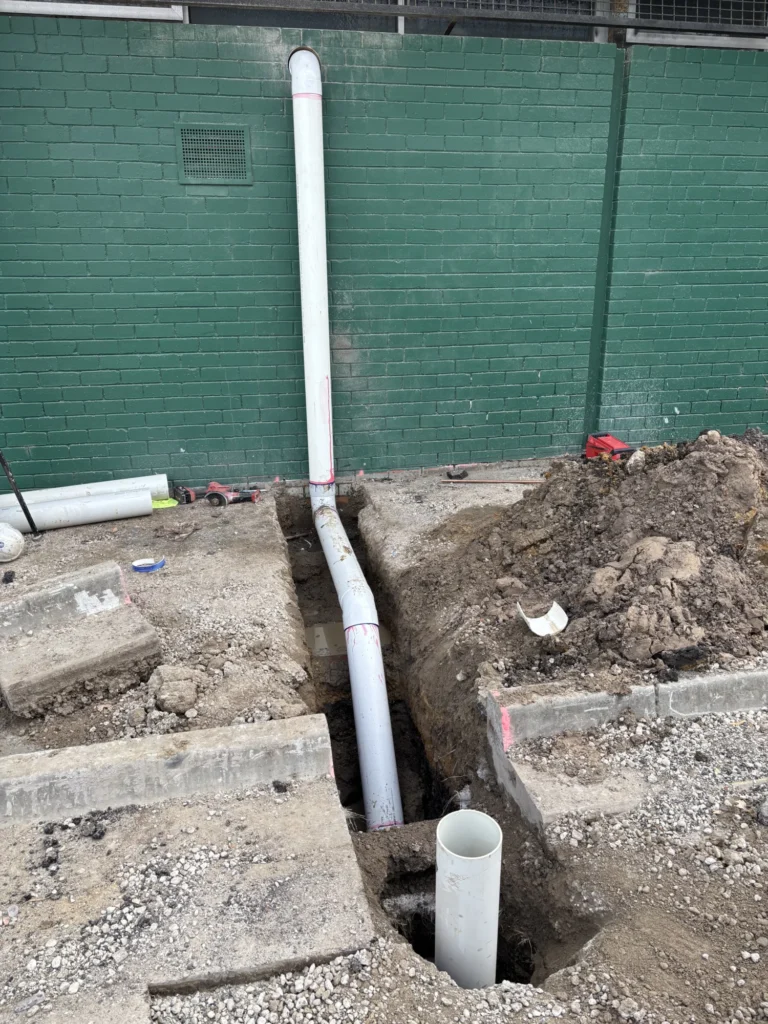
A tank and a detention volume written into a permit have to be built the way they were drawn, and that is far easier to arrange before the slab, the paving and the driveway go in. Measured Plumbing installs rainwater tanks, pits, detention systems and pumps across Melbourne, works to your engineer’s design, and puts the scope in writing before anything is excavated.
Ready to get it in the ground?