
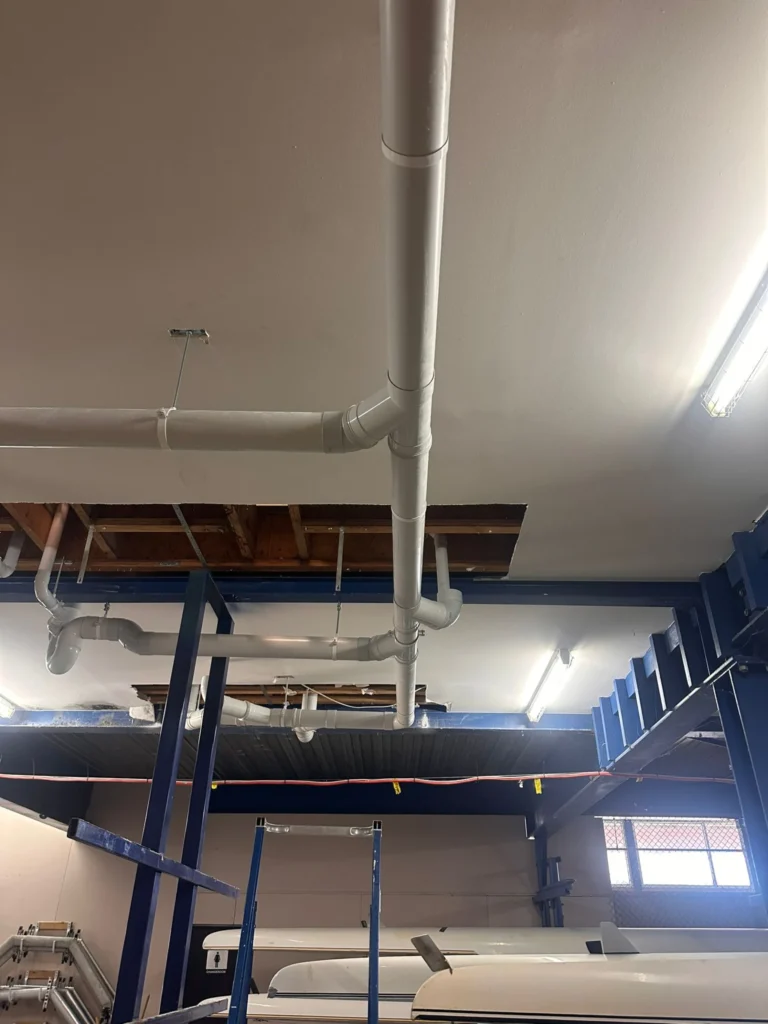
The first priority is to stop the flow of water safely. These steps can limit further damage while a plumber is on the way:
Shut off the water at the meter: it is usually inside a box near the front boundary. Turn the tap clockwise until it stops.
Use the internal isolation valve in an apartment: it may be under the sink or in the laundry. Contact building management if the shared riser also needs to be isolated.
Open a low tap: an outside garden tap can help release the remaining pressure from the line.
Keep clear of wet electrical fittings: do not touch the switchboard, power points or downlights if water has reached them.
Move belongings away from the affected area: lift what you can from the floor and contain the water where it is safe to do so.
Photograph the leak and visible damage: clear images can help with the plumbing assessment and any insurance enquiry.
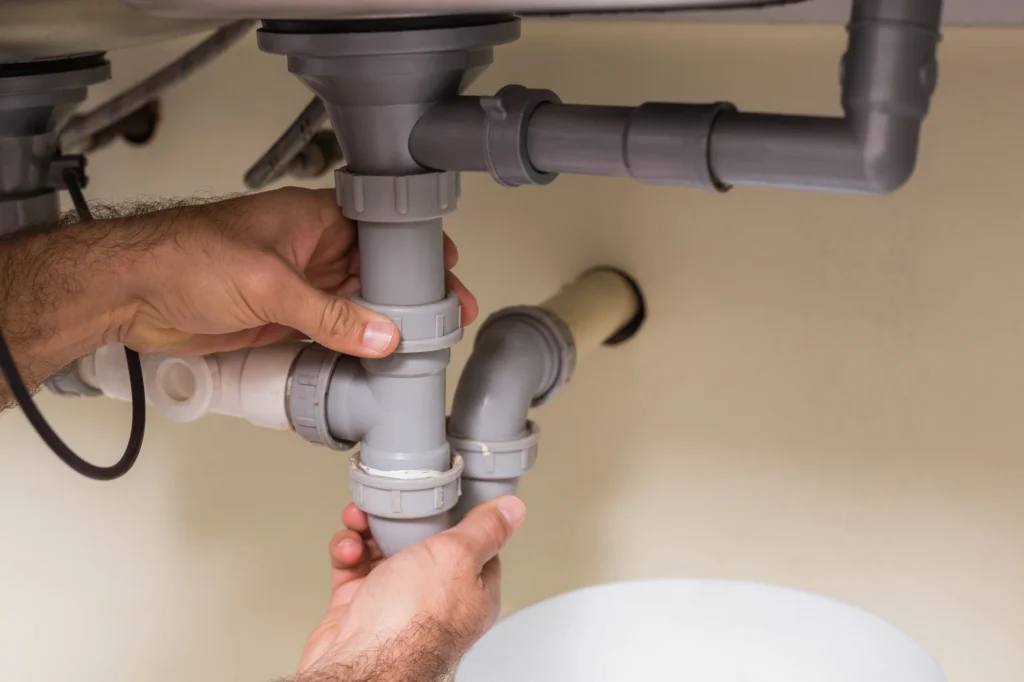
Once the water is off, the immediate damage should stop increasing. The failed pipe can then be located, exposed and assessed without rushing the repair decision.
Burst pipe repair
Leaking copper pipe repair
Water pipe replacement and renewals
Concealed pipe leaks
Pressure limiting and isolation valves
Flexible hose and connection replacement
Strata and property manager work
Water service and main repairs
15+ years' experience
Pressure tested before reinstatement
Repair or renew, called on pipe condition
Documented in writing
Tidy finish
I was extremely impressed by the efficiency, professionalism and service provided. Cannot recommend them enough!
I recently used this new plumbing company and couldn't be happier with the experience. From the initial phone call through to the completion of the job, the team was professional, friendly, and incredibly responsive. Read More
A single burst in otherwise sound pipe is worth repairing: cut out the failed section, test the line, close it up. A renewal makes more sense once the same run has leaked repeatedly, or the pipe shows corrosion and pinholing when it is cut open.
| What to check | Usually repair | Usually renew |
| Failure pattern | One burst, one place, sound pipe either side | Repeat leaks over months or years along the same run |
| Pipe condition | Wall thickness still good, no pinholing nearby | Visible corrosion, pinholing or thinning when the pipe is cut |
| Material | Modern copper or PVC pressure pipe | Galvanised steel, or early thin-walled copper |
| Access | The failed section is reachable without major demolition | The run is already being opened up, or a renovation is underway |
| Pressure | Within range, with a limiting valve fitted | High uncontrolled pressure that has already claimed one joint |
There is one more consideration for older homes. If the bathroom or kitchen is being renovated in the next year or two, renewing the pipework while the walls are open during a bathroom or new build fit-out is far less disruptive than repairing it twice.
Access drives the price more than the pipe does. What changes the scope is where the failure sits, whether it is in a wall, ceiling, subfloor or under a slab, how much of the run has to be exposed, whether tiles or cabinetry have to come off, and whether the property can be without water while the work is done.
A renewal is priced on the length of the run and the number of fixtures it feeds. Every job is quoted in writing once the pipe has been seen, with reinstatement stated up front. Plaster patching and tiling are usually a separate trade, and the quote will say so. Where the water damage is likely to be claimable, the cause and affected areas are documented for an insurance and make-safe claim.
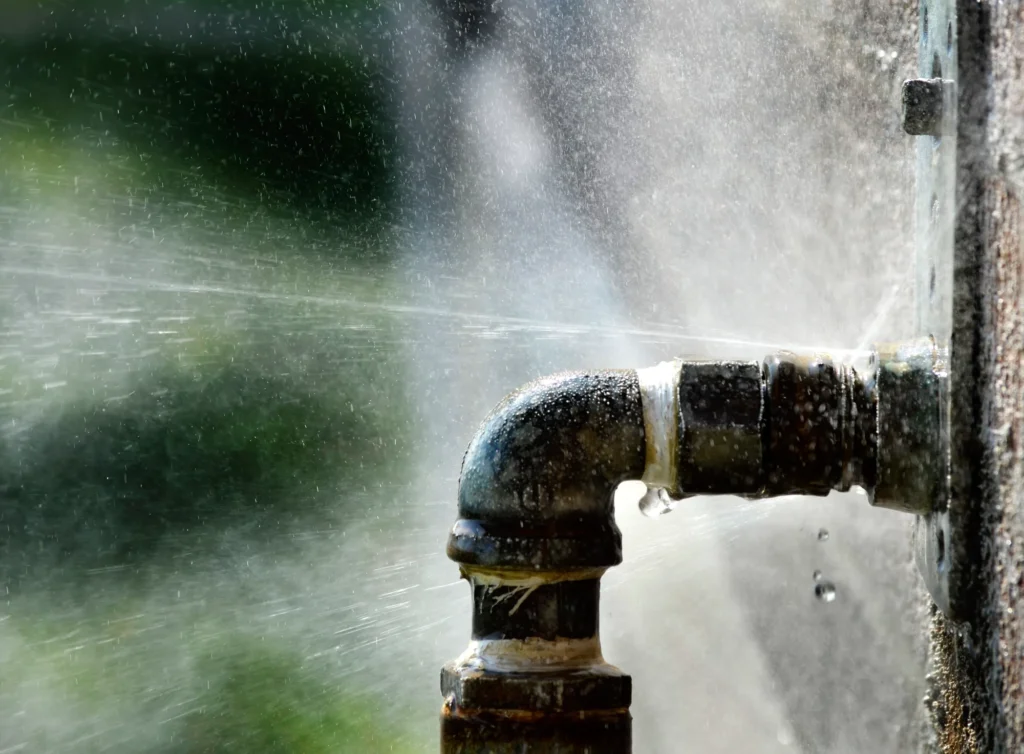
The usual signs are a drop in pressure, a meter that keeps ticking with every tap closed, a warm patch on a floor, or a musty smell in one room. Turn everything off and watch the meter for a few minutes. If it still moves, water is escaping somewhere in the property.
Only if the failure sits in accessible pipework, such as a subfloor, riser cupboard or ceiling space. Pipework inside a wall has to be exposed to be repaired properly, which is why the leak is located precisely first so the access hole is small and in the right place.
Not always. If one section has failed and the rest of the pipe is sound when it is cut, a repair is reasonable. Where corrosion or pinholing shows up along the run, staging a renewal room by room is usually the better spend.
For a single accessible repair, usually a matter of hours. Renewals are staged so the property has water at the end of each day wherever the layout allows, and the expected downtime is confirmed in writing before work starts.
In a rental, the repair is the owner's responsibility and the call-out is usually authorised by the property manager. In an apartment, pipework serving one lot is generally the owner's and shared risers are the owners corporation's. The scope is documented so whoever approves the work can see exactly what is included.
Access is cut cleanly and closed up where it is a straightforward panel, but plaster finishing, tiling and painting are usually done by the relevant trade. The quote states what is included so there is no gap between the plumbing and the finish.